Zirconia or lithium disilicate? At the lab, it is one of the questions we are asked most often. Both materials are excellent, but they do not serve the same indications. The right choice depends on the region, the occlusion, the substrate and the luting method.
Two ceramics, two approaches
Zirconia: strength first
Zirconia is a polycrystalline ceramic. Its high mechanical strength makes it the material of choice for the posterior region, bridges and patients with heavy occlusal loads. Recent, more translucent generations have greatly improved its esthetic rendering.
Lithium disilicate: esthetics and bonding
Lithium disilicate is a glass-ceramic. Its glassy phase gives it a very natural translucency and depth of shade. Above all, it can be etched and bonded, which allows very conservative preparations.
The comparison at a glance
| Criterion | Zirconia | Lithium disilicate |
|---|---|---|
| Flexural strength | About 600 to 1,200 MPa depending on the generation | About 360 to 500 MPa |
| Translucency | Medium to good (4Y and 5Y zirconias) | Very good |
| Luting | Conventional cementation possible, or bonding after sandblasting + MDP primer | Bonding recommended after HF etching + silane |
| Minimum occlusal thickness (monolithic) | About 0.5 to 1 mm | About 1 to 1.5 mm |
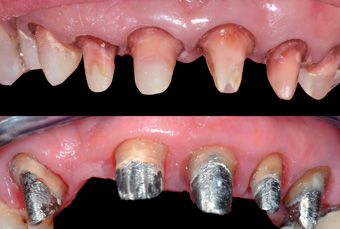
| Masking a discolored stump | Good | Limited, depending on the opacity chosen |
| Key indications | Posterior, bridges, implants, bruxism | Anterior, veneers, inlays-onlays, single crowns |
Values vary between manufacturers and protocols: they give an order of magnitude, not an absolute rule.
Which material for which situation?
Anterior region and high esthetic demands
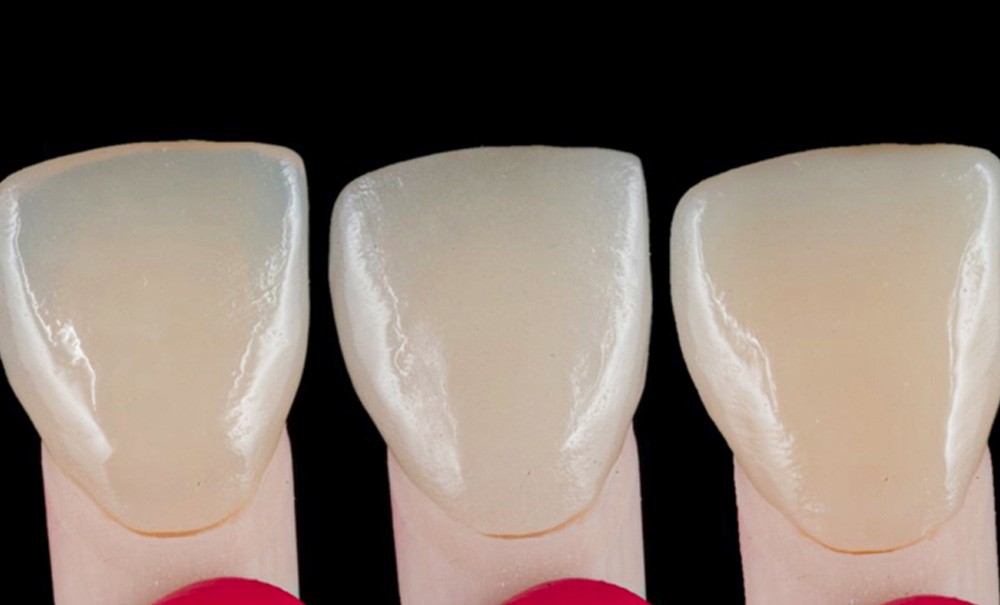
For a single central incisor, a veneer or a case where the patient expects a very natural result, lithium disilicate often remains the first choice. Layered or stained, it finely reproduces incisal translucency effects.
Posterior region and high loads
On molars, in a bruxist patient or when the prosthetic space is limited, monolithic zirconia makes the restoration safer. It tolerates thinner sections and limits the risk of fracture.
Bridges and implantology
Beyond three units, or as soon as the bridge extends to the molars, zirconia is the obvious choice. It is also widely used on implants, as screw-retained crowns or crowns cemented on an abutment.
Minimal preparations and bonding
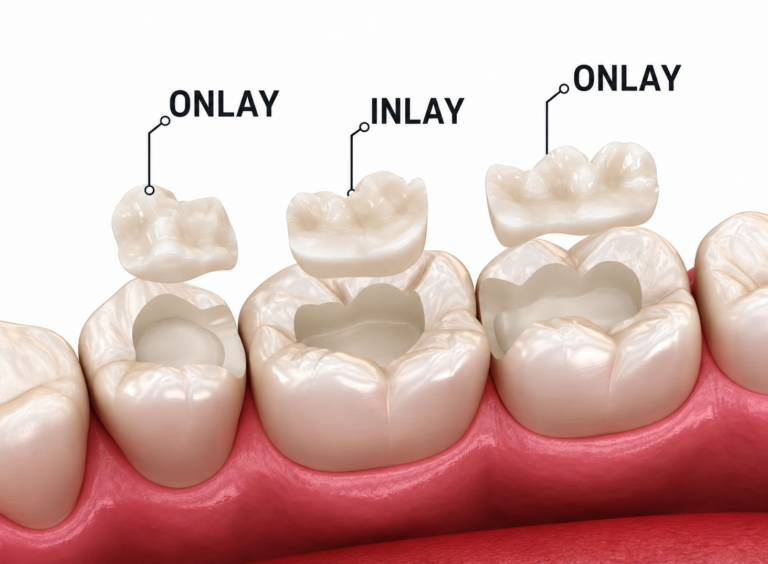
Inlays, onlays, overlays and veneers rely on bonding. Lithium disilicate, which can be etched, is the most suitable material here.
The information that helps us choose well
To recommend the most suitable material, the lab needs a few details as soon as the impression is taken:
- the stump shade, in addition to the desired shade;
- the available prosthetic space, or a scan of the opposing arch;
- the occlusal context (bruxism, parafunctions);
- the planned luting method (bonding or cementation);
- photos with a shade guide if possible.
When in doubt, let's talk before fabrication: a five-minute call often saves an adjustment.
Our approach at Dune Dental
Every restoration is designed and manufactured in our lab in France. We work with zirconia as well as lithium disilicate, and we advise you case by case, with no material dogma. Our guide "Choosing the right material" also covers composite and borderline indications.
FAQ
Is zirconia less esthetic than lithium disilicate?
Recent translucent zirconias offer a very good result, especially in the posterior region. In the anterior region, lithium disilicate keeps an edge for the most demanding cases.
Can a lithium disilicate crown be cemented?
It is possible for a crown with sufficient thickness, but bonding remains recommended. It strengthens the whole assembly and improves long-term retention.
Which material for a bruxist patient?
Monolithic zirconia is generally preferred. A night guard is still recommended.
How do you bond zirconia?
Sandblast with alumina at low pressure, then apply an MDP-containing primer before the bonding resin.